Multi-Chain ICO Development: A Complete Guide for Blockchain Startups

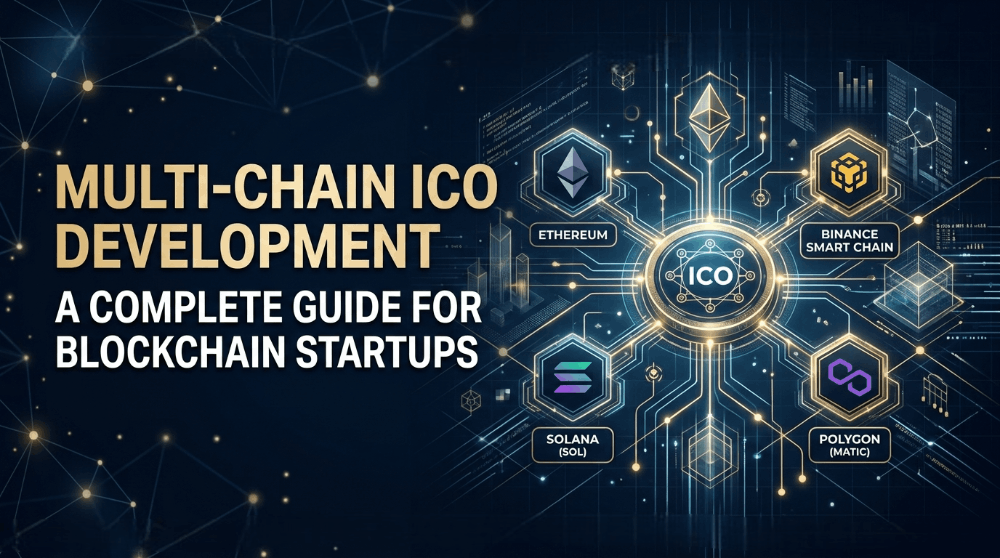
As blockchain adoption grows, many startups are moving beyond a single network by launching tokens across multiple blockchains such as Ethereum, BNB Chain, Polygon, Solana, and Arbitrum. This approach improves accessibility, lowers transaction costs, and reaches a wider investor audience.
Understanding Multi-Chain ICO Development
A multi-chain ICO is a fundraising model where a blockchain startup allows investors to participate using assets from multiple blockchain networks instead of a single ecosystem.
Traditional ICOs usually operate on one blockchain. For example, an ERC-20 token sale only accepts Ethereum-compatible wallets and cryptocurrencies. While this approach simplifies development, it limits participation to users within that blockchain ecosystem.
Multi-chain ICOs remove this limitation by enabling investors to contribute through different networks while receiving the same project token.
For example, investors may contribute using:
- ETH on Ethereum
- BNB on BNB Chain
- USDT on Ethereum, Tron, or Polygon
- SOL on Solana
- USDC on Base or Arbitrum
Behind the scenes, smart contracts, bridge technologies, and backend infrastructure synchronize contributions across these blockchains, maintaining accurate records throughout the fundraising process.
This approach creates a more inclusive fundraising environment by reducing barriers for participants who already hold assets on different networks.
Why Blockchain Startups Are Choosing Multi-Chain ICOs
Blockchain users no longer exist within a single ecosystem. Ethereum remains popular, but millions of users actively use BNB Chain, Solana, Polygon, Avalanche, and Layer-2 networks because of their lower fees and faster transactions.
Launching an ICO across multiple chains allows startups to reach these diverse communities without forcing investors to bridge assets or create additional wallets.
Several factors contribute to the growing adoption of multi-chain ICOs.
Larger Investor Base
Every blockchain has its own active community. Supporting multiple networks significantly increases the number of potential participants.
Instead of targeting only Ethereum users, startups can simultaneously attract users from:
- Solana ecosystem
- BNB Chain ecosystem
- Polygon community
- Layer-2 Ethereum users
- Stablecoin holders across different chains
This broader accessibility often results in stronger fundraising performance.
Lower Transaction Costs
Ethereum gas fees can fluctuate dramatically during periods of network congestion.
By supporting alternative blockchains such as Polygon, BNB Chain, or Arbitrum, investors can participate with considerably lower transaction fees.
Lower costs encourage smaller investors to join token sales without losing a significant portion of their investment to network fees.
Reduced Network Congestion
High-demand ICOs can overwhelm a single blockchain, causing delayed confirmations and failed transactions.
Distributing fundraising activity across multiple chains reduces congestion and improves transaction reliability during peak participation.
Better User Experience
Investors generally prefer using wallets and networks they already trust.
Allowing users to participate without moving assets between chains creates a smoother investment experience and reduces technical complexity.
Core Components of Multi-Chain ICO Development
Developing a multi-chain ICO requires considerably more infrastructure than a traditional token sale.
Several components work together to create a secure and synchronized fundraising platform.
Multi-Chain Smart Contracts
Each supported blockchain requires its own smart contracts.
These contracts handle:
- Investor contributions
- Token allocation
- Fund collection
- Vesting schedules
- Refund logic when applicable
Although the contracts exist on different blockchains, they must maintain consistent token sale rules.
Cross-Chain Communication
The platform requires mechanisms to synchronize fundraising information between different blockchains.
Cross-chain communication enables:
- Total funds raised
- Remaining token supply
- Investor allocations
- Token distribution schedules
Without synchronization, maintaining accurate token sale data becomes extremely difficult.
Token Allocation Engine
A centralized allocation engine or decentralized synchronization mechanism records all contributions regardless of their origin blockchain.
For example:
- Investor A contributes using Ethereum.
- Investor B participates through BNB Chain.
- Investor C invests via Solana.
The allocation system combines these transactions into one unified token distribution database.
Investor Dashboard
Modern ICO platforms typically include a dashboard that allows participants to:
- Connect multiple wallet types
- View investment history
- Track token allocations
- Monitor vesting schedules
- Claim tokens after launch
Supporting wallets such as MetaMask, Trust Wallet, Phantom, WalletConnect, and Coinbase Wallet significantly improves accessibility.
Administrative Control Panel
Project administrators require a dashboard to manage:
- ICO phases
- Token prices
- Hard cap
- Soft cap
- Accepted cryptocurrencies
- Whitelisting
- KYC verification
- Fund monitoring
This control panel allows teams to manage fundraising activities without modifying smart contracts.
Choosing the Right Blockchain Networks
Selecting supported blockchains should align with the project's audience, technical requirements, and fundraising strategy.
Ethereum remains the preferred network for institutional investors and DeFi projects due to its mature ecosystem and extensive developer community.
BNB Chain attracts users seeking lower transaction fees and faster confirmations, making it a popular option for retail participants.
Polygon provides Ethereum compatibility while significantly reducing gas costs, making it attractive for projects targeting a broader user base.
Solana offers high transaction throughput and low fees, particularly appealing for gaming, NFT, and consumer-focused blockchain applications.
Layer-2 networks such as Arbitrum, Optimism, and Base continue to gain adoption by combining Ethereum security with faster and less expensive transactions.
Supporting multiple carefully selected networks often delivers better results than attempting to integrate every available blockchain.
Security Considerations for Multi-Chain ICOs
Security remains the highest priority during ICO development because fundraising platforms manage significant amounts of digital assets.
Every additional blockchain introduces new smart contracts, increasing the potential attack surface.
Several security practices help reduce risk.
Independent Smart Contract Audits
Every blockchain implementation should undergo independent security auditing before deployment.
Auditors review:
- Reentrancy vulnerabilities
- Integer overflow issues
- Access control
- Logic errors
- Token distribution mechanisms
Professional audits significantly reduce the likelihood of exploitable vulnerabilities.
Multi-Signature Treasury Wallets
Raised funds should be stored in multi-signature wallets rather than a single administrator-controlled wallet.
This approach prevents unauthorized fund transfers if one private key becomes compromised.
Secure Cross-Chain Infrastructure
Cross-chain bridges have historically been among the largest targets for blockchain attacks.
According to industry reports, bridge exploits have accounted for billions of dollars in cryptocurrency losses over the past few years, highlighting the importance of secure bridge architecture, continuous monitoring, and rigorous testing.
Projects should carefully evaluate any bridge or interoperability protocol used during token sales.
Continuous Monitoring
Security monitoring should continue throughout the fundraising period.
Automated systems can detect:
- Suspicious wallet activity
- Unusual transaction volumes
- Smart contract anomalies
- Failed transaction spikes
- Potential denial-of-service attacks
Real-time monitoring allows teams to respond quickly before incidents escalate.
Regulatory and Compliance Considerations
Technology alone does not determine the success of an ICO. Compliance has become equally important.
Many jurisdictions require projects to implement Know Your Customer (KYC) and Anti-Money Laundering (AML) procedures before accepting investments.
Depending on the fundraising jurisdiction, projects may also need to:
- Restrict participation from specific countries
- Verify investor identities
- Screen against sanctions lists
- Maintain transaction records
- Follow securities regulations where applicable
Legal requirements vary significantly across countries, making jurisdiction-specific legal guidance an important part of ICO planning.
Transparent documentation, including white papers, token allocation models, risk disclosures, and governance information, also helps build investor confidence.
Best Practices for a Successful Multi-Chain ICO
Launching across multiple blockchains introduces additional complexity, making preparation especially important.
Projects that perform well typically follow several proven practices.
Begin development early so smart contracts, dashboards, and cross-chain infrastructure can be thoroughly tested before launch. Rushing deployment increases the likelihood of technical issues during the fundraising period.
Keep tokenomics consistent across all supported networks. Investors should receive identical pricing, vesting schedules, and allocation rules regardless of the blockchain they use.
Conduct multiple testing phases using public testnets. Simulating high transaction volumes helps identify synchronization issues and scalability limitations before real funds are involved.
Publish smart contract addresses, audit reports, token allocation details, and roadmap updates well in advance. Transparency improves credibility and helps investors verify the authenticity of the token sale.
Provide responsive customer support throughout the fundraising campaign. Many investors may require assistance with wallet connections, supported networks, or token claims, and timely support contributes to a positive user experience.
Conclusion
Multi-chain ICO development has become an important evolution in blockchain fundraising by allowing startups to reach investors across multiple blockchain ecosystems instead of relying on a single network. Supporting platforms such as Ethereum, BNB Chain, Polygon, Solana, and Layer-2 networks improves accessibility, reduces transaction costs, and creates a better investment experience. However, success depends on more than adding additional blockchains. Projects need secure smart contracts, reliable cross-chain infrastructure, transparent tokenomics, regulatory compliance, and comprehensive testing before launch. With careful planning and a security-first approach, blockchain startups can build multi-chain ICO platforms that attract a wider investor base while meeting the expectations of today's increasingly sophisticated crypto market. Organizations like Blockchain App Factory help businesses develop secure, compliant, and feature-rich multi-chain ICO solutions that support modern fundraising requirements across leading blockchain ecosystems.