💭 Who Really Owns Web3: Users, Developers… or Infrastructure Giants?

👀 Introduction
Web3 was built on a powerful promise:
👉 Ownership returns to the people.
Unlike Web2 — where tech corporations own your data, your content, and often your digital identity — Web3 claims to give ownership back to:
- Users
- Creators
- Communities
But as the ecosystem grows, a difficult question appears:
Who really owns Web3?
Is it:
- The users with wallets and tokens?
- The developers building protocols?
- Or the infrastructure giants quietly powering everything behind the scenes?
Let’s take a deeper look 👇
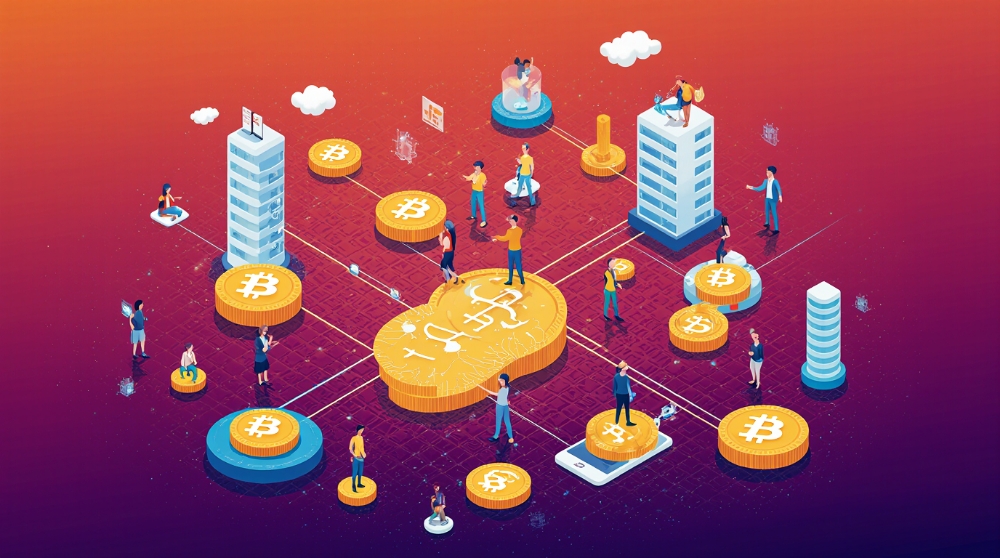
🌐 The Ideal Vision: Users Own Web3
At its core, Web3 promotes:
- Self-custody wallets
- Decentralized governance
- Token-based participation
- Community voting systems
In theory:
- You own your private keys
- You control your assets
- You participate in governance
- You decide how platforms evolve
This sounds like true digital ownership.
No central authority.
No single company controlling everything.
But theory and reality are not always identical.
🪙 Token Ownership vs Real Control
Many Web3 platforms distribute tokens to users.
Holding tokens often means:
- Voting rights
- Governance participation
- Access to features
- Economic rewards
But here’s the challenge:
Not all token holders have equal influence.
Large token holders — often called “whales” — can:
- Influence governance votes
- Shape protocol decisions
- Affect ecosystem direction
So while users technically “own” tokens, power can still concentrate.
Ownership may exist — but influence can remain uneven.
👨💻 Developers: The Silent Architects
Developers play a critical role in Web3.
They:
- Design smart contracts
- Write protocol rules
- Launch blockchain networks
- Define system architecture
Even in decentralized systems, code determines:
- How transactions work
- How rewards are distributed
- How governance functions
If developers control the initial structure, do they indirectly control Web3?
In many cases:
- Early development teams hold large token allocations
- Founders influence early governance
- Core contributors shape long-term updates
This doesn’t necessarily mean control is centralized.
But it shows that ownership is more complex than it appears.
🏗️ Infrastructure Giants: The Hidden Layer
Here’s a side of Web3 that many users don’t think about.
While blockchains are decentralized, much of Web3 still depends on:
- Cloud hosting services
- Node providers
- API platforms
- Infrastructure companies
Many decentralized applications rely on centralized services to:
- Host front-end interfaces
- Store data
- Connect users to blockchains
If major infrastructure providers experience downtime or policy changes, entire ecosystems can be affected.
This raises an uncomfortable question:
Is Web3 fully decentralized… or partially dependent?
🔐 The Wallet Illusion
Users are told:
“If you control your private keys, you control your assets.”
And that’s true.
But consider this:
Most users access Web3 through:
- Wallet applications
- Exchanges
- Interfaces
- Third-party tools
If these services:
- Change policies
- Block access
- Experience hacks
User experience can be disrupted.
Ownership of assets does not always equal independence from infrastructure.
⚖️ Decentralization Is a Spectrum
Ownership in Web3 is not binary.
It’s not simply:
- Centralized
- or
- Fully decentralized
It exists on a spectrum.
Some protocols are highly decentralized.
Others remain partially dependent on centralized layers.
The real question isn’t “Is Web3 owned by one group?”
It’s:
👉 How distributed is power across the ecosystem?
🌍 Economic Power Still Concentrates
Even in decentralized finance (DeFi), power can accumulate.
Large investors can:
- Control liquidity pools
- Influence governance
- Shape project direction
This mirrors traditional financial systems in some ways.
Web3 may reduce centralized corporate control —
but it doesn’t automatically eliminate economic inequality.
Ownership is possible.
Equal power is not guaranteed.
🚀 The Case for Shared Ownership
Despite these concerns, Web3 still offers something revolutionary:
- Transparent code
- Open-source development
- Community governance
- Global participation
Anyone can:
- Inspect smart contracts
- Propose changes
- Build on existing protocols
- Fork projects
This level of openness was impossible in Web2.
Even if power is uneven, access is broader.
And that changes everything.
🤝 True Ownership Requires Participation
Ownership in Web3 is not passive.
It requires:
- Active governance participation
- Understanding tokenomics
- Technical literacy
- Community involvement
Users who simply hold tokens without engaging may have limited influence.
Ownership becomes meaningful when combined with participation.
🔮 The Future of Web3 Ownership
As Web3 matures, we may see:
- Improved decentralized infrastructure
- More distributed node networks
- Better governance mechanisms
- Reduced reliance on centralized services
Innovation may push Web3 closer to its original promise.
But complete decentralization may remain an evolving goal — not a finished reality.
✅ Final Thoughts
So… who really owns Web3?
👉 Users own their assets.
👉 Developers shape the architecture.
👉 Infrastructure providers support the system.
Ownership is shared — but influence varies.
Web3 does not eliminate power structures.
It redistributes them.
The true future of Web3 ownership depends on:
- Transparency
- Participation
- Responsible development
- Community awareness
Ownership is possible.
But it must be actively protected.
💬 What Do You Think?
Do you believe Web3 truly belongs to its users?
Or do developers and infrastructure giants still hold the real power?
Share your perspective 👇